Customize Your Print
Choose Frame
Choose Size
Print + Framing + Shipping
$145
Printed on archival fine art paper · Fulfilled by Prodigi
An engineer’s precision. An artist’s instincts. A crisis communicator’s nerve.
I help organizations find what they actually sell, build the story around it, and make it land.
 Build your digital twinKnows how your business runs
 Fix your positioningSell what you actually do
 Change managementMake the change stick
 Hire me to shootHeadshots and events
 Learn it yourselfWorkshops and courses
 Buy a printManhattan, framed
 Read the thinkingEssays and articles
 Who I amEngineer, MBA, artist
Most organizations didn’t decide to adopt AI. It arrived — in the tools your team downloads, the features that appeared in your existing software, the workarounds your staff discovered on their own. The decision wasn’t made strategically. Which means the exposure — operational, reputational, competitive — wasn’t assessed strategically either.
That’s the gap. And in that gap live the questions worth asking before the consultant arrives.
Most organizations have a communication failure they can’t quite name. The deck isn’t landing. The change initiative is stalling. The pitch isn’t converting. It’s almost never the quality of the work. It’s almost always how that work is framed, described, and delivered to the people who need to receive it. That’s the problem these engagements are built to solve.

An honest diagnosis before you rebuild anything. A deep read of your site, decks, proposals and core messaging — not for polish, for structural failure. What story are you telling, to whom, and is it the one that gets the decision you need? You get a written assessment and a prioritized action plan.

When an organization says ten things, it says nothing. This builds the single story everything else hangs on — mission and vision in language people respond to, a messaging framework the whole team can actually run, and stakeholder communications that move something. For organizations in transition, or who never defined what they stand for.

The worst time to write a crisis plan is during the crisis. Military doctrine is built on one principle: what to say, when, and to whom is decided before the pressure hits — because under pressure, people default to silence or panic. You get a custom playbook and a live workshop against real scenarios.

Authority in a room is not a personality trait. It is a set of learnable skills, and this coaching draws on performance training rather than corporate frameworks: how you use your body, your silence, your story and your specificity to hold attention. For senior leaders who are technically excellent and know their communication is not landing.

Full change management on the Switch Framework — Rider, Elephant, Path. Behavioral change methodology applied to corporate transformation, proven across 380+ staff in 8+ global regions.

Most brand videos describe an organization. The ones people finish tell a story with a human at the center. Producer of the NYPD Final Journey tribute and the U.S. Census Bureau’s national campaign — documentary instinct and editorial judgment brought to corporate video, from origin stories to event work a still photograph cannot carry.

Uncovering what your business actually delivers, then rebuilding positioning, systems and communication to match. Three engagement tiers.

Where AI creates real leverage in your business — operations, client communication, marketing, decisions. No jargon, no theoretical use cases. The three or four highest-impact places to act now, with a 90-minute advisory session.

Most sites are a list of everything a business does, in the order it thought of them. This rebuilds yours around the question a visitor actually arrives with: structure and navigation, the words on the page, and the images that carry them. Positioning made visible, rather than described.
Working in professional services? The AI Safety & Privacy Audit is built for your specific exposure profile. Get in touch →
A subscription is not a capability. What turns AI into leverage is an operating system built around how your business actually runs — what it knows, who it answers to, and what it does while you sleep. I build those, and I run one myself. Everything below was proven on my own before it was offered to anyone else.

The instinct to let AI “stabilize” before acting is understandable — and costly. While you’re waiting, leaner competitors are compressing timelines, cutting costs, and delivering faster. The gap compounds every quarter.

AI vendors pitch to your pain points. Every product sounds transformative in a demo. Without an independent read of what your business actually needs, you end up with subscriptions, not strategy — and a team that doesn’t know how to use any of it.

AI content is written by engineers for engineers. Whitepapers, webinars, even most consultants assume a level of technical fluency that most business owners don’t have and shouldn’t need. The gap between “AI is important” and “here’s exactly what to do on Monday” is where most leaders get stuck.

A structured assessment of where AI creates genuine leverage in your specific business — operations, client communication, marketing, or decision-making. No jargon, no theoretical use cases. Just the 3–4 places worth acting on now, with a 90-minute advisory session included.
Not a chatbot trained on your documents — an operating system. It holds everything your business knows, runs a chief of staff that manages pipeline, relationships, and decisions, and maintains its own memory so the knowledge compounds instead of decaying. You are the architect and the overseer. You are never the operator.

From audit to action plan: tool selection, workflow redesign, team adoption approach, and a 90-day implementation calendar. No coding, no engineering — pure strategic clarity for leadership on which AI tools would legally and safely save your firm time.
The honest comparison is not another software subscription — it is the right-hand hire you keep deciding you cannot afford. That role costs $86,000 to $106,000 a year before benefits, turns over, and goes home at six. Year one of an AI operating system is roughly a third of that, and it works at 3 a.m. on a Sunday.
Are you selling the wrong thing?
Most businesses are selling the wrong thing — not in product, but in how they describe, position, and deliver their value. The fix requires one fundamental shift and the operational infrastructure to lock it in.

What you say you offer vs. what clients actually experience. Closing this gap alone typically increases conversion rates by 20–40%.

How your internal team describes the business vs. how it appears to prospects. The source of inconsistent sales outcomes and mixed referral quality.

The quality of your work vs. the infrastructure that makes it repeatable and defensible. This is why good businesses plateau — and why lesser competitors keep winning.

Fast, focused clarity on one critical positioning problem. 1-day Discovery Workshop, Value Diagnosis Report, core positioning statement with 3 variations, and a 90-minute implementation coaching session.
Book a Discovery Call
Complete positioning and communications overhaul. Full Positioning Playbook, website copy rewrite, proposal templates, LinkedIn strategy, 3-month content calendar, and team training sessions.
Book a Discovery Call
Full organizational transformation for businesses navigating relaunch, merger, or new market entry. All 8 operational workstreams, thought leadership platform, change management facilitation.
Discuss Your SituationIn military doctrine, WHAM is how you shift behavior at scale without coercion. You make the new way easier, more obvious, and more human than the old one. You don’t mandate change. You design the conditions for it.
Built from real deployments at the U.S. Census Bureau, NYPD, and Fortune 500 organizations — not from a textbook. The same principles that work in a conflict zone work in a boardroom, because human psychology doesn’t change with the dress code.
The technology worked. The business case was solid. Leadership was aligned. And it still didn't stick — because nobody adequately addressed the humans who were supposed to carry it out. Change fails at the people layer. Almost every time.

These frameworks are cited in every RFP, taught in every MBA program, and checked off in every project plan. They exist for good reasons — they're credible, rigorous, and they satisfy procurement. They're also built on a fundamental misread of how people actually change.

Standard frameworks treat change as a process to be administered — awareness campaigns, training plans, stakeholder matrices. They generate documentation. What they rarely generate is behavioral shift. They address the mechanics. They ignore the psychology.

When adoption stalls, the reflex is to blame culture, blame middle management, blame the workforce. The real culprit is almost always a change approach that asked people to switch behaviors without giving their brains a reason, their gut a feeling, or their environment a nudge.
“What looks like resistance is often lack of clarity. What looks like laziness is often exhaustion. What looks like a people problem is almost always a systems problem.”

What looks like resistance is often lack of clarity. Script the critical moves — make the rational case explicit, specific, and actionable. Vague vision creates inertia; precise instructions create movement.

Logic alone never changed a deeply ingrained habit. The emotional reality of change must be addressed directly — not managed around. Find the feeling that moves people, not just the argument that convinces them.

The environment determines behavior more than willpower does. Design the structural conditions that make the new behavior the path of least resistance — and the old behavior harder to sustain.
A global professional services firm had a lapse days problem — invoicing delays baked into the habits of 380+ staff across 8+ global regions. The standard response would have been a mandate, a training module, and a dashboard. Instead: data-driven storytelling, structured behavioral engagement, and an environment redesigned to make the right behavior easier than the old one. In 16 weeks, lapse days dropped 35–50%. Not through compliance. Through design.
Discuss Your Change Initiative →Manhattan clients have a specific problem: the city moves faster than anywhere else, the stakes are higher, and the visual standards are unforgiving. A $4M listing photographed like a suburban home. A Wall Street gala documented by someone who’s never been inside one. A corporate lobby that says nothing about the brand it represents. These are not generic photography problems — they require someone who lives and works inside the market they’re shooting.

Professional headshots for LinkedIn, firm websites, and annual reports. Individual sessions or full-team days at your offices or on location.

IPOs, galas, conference keynotes, product launches, award ceremonies. Wall Street financial events and investor days.

Manhattan listing photography for Compass, Sotheby’s, and Corcoran. Architectural detail and interior photography for hospitality use.

Photography of artwork for artists’ portfolios, gallery submissions, insurance, and reproduction. NYC has the highest concentration of galleries in the country.

Visual minutes — live illustration of corporate meetings, conferences, and events. A growing premium category in NYC’s corporate event market.

Permanent installations for corporate lobbies, hotel corridors, and boutique offices. A single licensing deal can generate $500–$20,000+.
Workshops that combine photography technique with the communication skills most professionals never learn but always need.

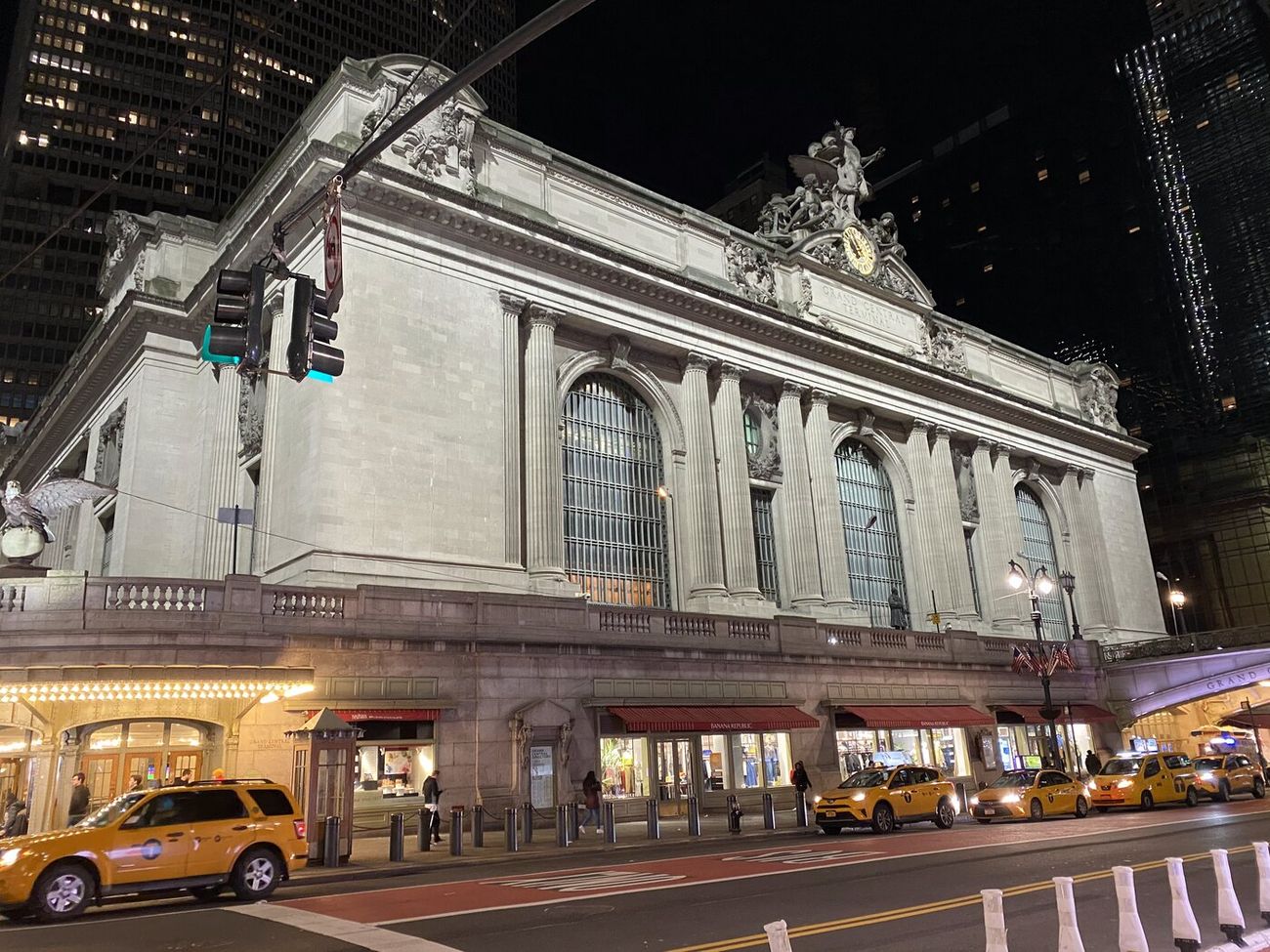
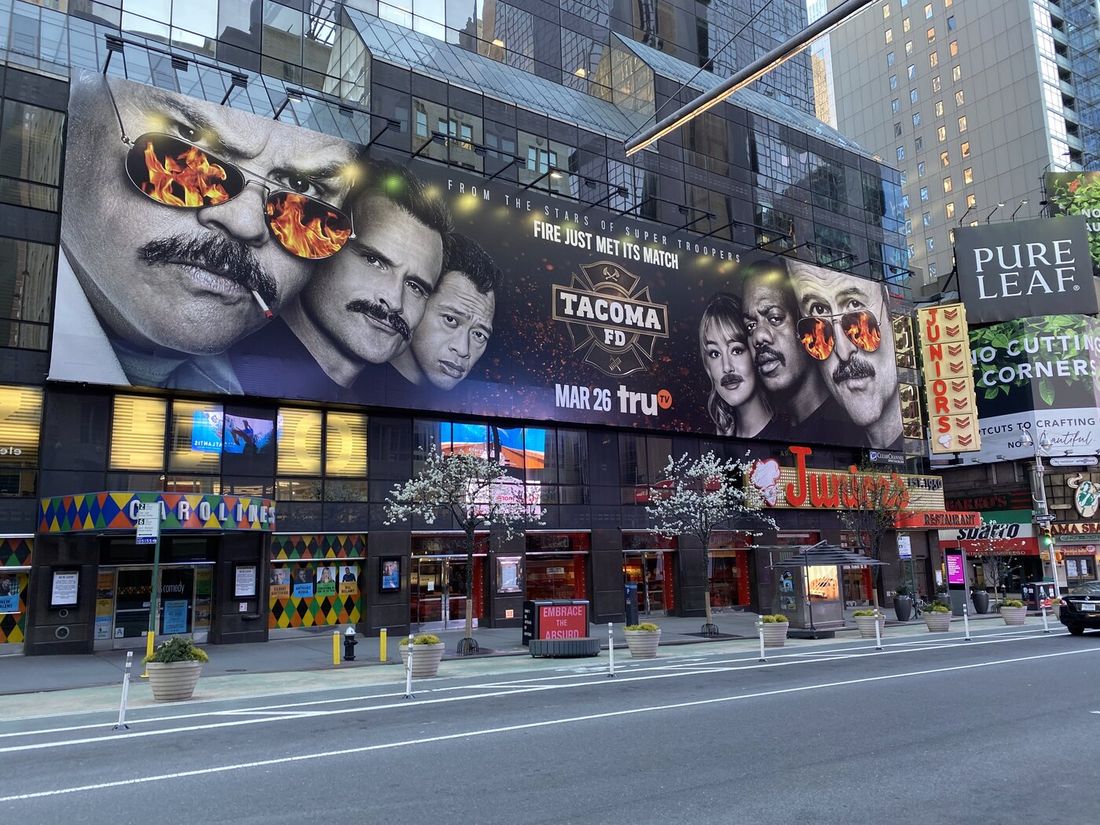
A half-day walk through some of Manhattan’s most photographically rich locations — led by a photographer who has spent years finding extraordinary light in ordinary moments here. The route takes in Grand Central Terminal’s main concourse (where cathedral light pours through arched windows every morning), the geometry of Midtown’s canyon streets, the Flatiron District’s famous triangular shadows, and the High Line’s elevated perspectives over the West Side. In Times Square we avoid the tourist hour — dawn is when the neon and the silence coexist. You learn to read light, find the human moment inside the architectural one, and make a compelling photograph with whatever camera you have.

Your team communicates with visuals every day — slides, proposals, reports — and almost nobody has ever been taught how. Most corporate visuals create noise instead of clarity. This half-day session teaches non-designers how to structure a visual argument, choose images that reinforce rather than distract, and build presentations that decision-makers actually read. Based on the same frameworks used in professional consulting engagements, not stock design theory.

Executives and founders who are impossible to ignore share one quality: they communicate in images, specifics, and stories — not abstractions. This self-paced course combines communication strategy, photography fundamentals, and video production for leaders who want their message to travel further than the room they delivered it in. No design background required. Just the willingness to say something worth remembering.

First-line managers are where most change initiatives actually break down — not at the executive level, but at the layer of people responsible for making it real on the ground. They’re given the mandate without the methodology. This workshop equips early-career and first-line leaders with the Switch Framework applied to their specific scale: how to recognize resistance, how to script clarity for their team, how to shape the immediate environment for behavior change. Built from real global deployments — Census Bureau, NYPD, Fortune 500 — not from a textbook.
From the canyons of Manhattan to the open American West — each photograph is available as a digital download, open-edition framed print, or numbered limited-edition signed fine art print, shipped anywhere in the world.





Every print is produced on archival-quality paper by professional fine art labs and drop-shipped directly to your door — fully framed and ready to hang.
High-resolution files delivered instantly. Print locally, use as desktop wallpaper, or share as a gift.

Museum-quality giclee on archival paper, framed in walnut, black, white, or maple — shipped ready to hang.
Numbered and hand-signed by Sonya. Maximum 50 prints per image. Once sold, that number is retired forever.
I’m Sonya — and yes, it’s spelled with a Y. My career doesn’t fit neatly into a category because it was never supposed to. I hold an engineering background and an MBA, I’ve managed crisis communications in military environments, I’ve written for BusinessWeek, I’ve performed on stage, I illustrate, I photograph, and I produce video. Everything connects — even when it doesn’t look like it from the outside.
My consulting work has taken me across three continents and into organizations that were struggling with the same fundamental problem: they had genuine value to deliver, but the people they needed to reach — whether employees, clients, or communities — couldn’t see it, feel it, or trust it. I’ve deployed at the U.S. Census Bureau, the NYPD, the Military College of Telecom Engineering, and with Fortune 500 organizations. I’ve also presented at international conferences and appeared in BusinessWeek. The through-line is always the same: communication is not a soft skill. It is an operational discipline.
The Global Lapse Days initiative — 380+ staff, 8+ global regions, 35–50% reduction in lapse days in 16 weeks — is my favorite proof point not because of the numbers, but because of what drove them: the Switch Framework applied the way it was meant to be. Not a mandate. Not a memo. A human-centered design that made the right behavior the obvious behavior.
What makes Sonya different: Most consultants bring either analytical rigor or creative instinct. Very few bring both, and almost none bring military crisis communications experience, performance arts training, engineering systems thinking, and twenty years of field-tested change work in a single engagement. That combination is not a coincidence — it is the product.
My photography is the same mind in a different medium. When I photograph Manhattan — the geometry of a canyon of light at Times Square at dawn, the moment Manhattanhenge turns Fifth Avenue into a cathedral of gold — I am doing what an engineer does when an artist is looking: finding the structure inside the beauty. Manhattan is my subject, my studio, and my home.
Book a Free Discovery CallWriting on leadership, communication, and the intersection of creativity and organizational life.
Your team is already using AI. The question isn’t whether to adopt it — it’s whether the ladder is leaning against the right wall. On the question no consultant asks before the engagement begins.
Read on LinkedIn →The machine will faithfully execute whatever you give it. A shallow question produces a shallow answer — at speed, at scale, dressed up in perfect grammar. This is the AI conversation nobody is having right now.
Read on LinkedIn →Most organizations hire for the role they have today. The most successful ones hire for the organization they’re trying to become. Here’s where the gap shows up.
Read on LinkedIn →A framework developed through years of advising leadership teams across sectors. The letters stand for something most leadership books never mention.
Read on LinkedIn →Creativity is not a personality trait — it’s a system. How organizations can build environments where creative thinking is the default, not the exception.
Read on LinkedIn →Every organization is asking what AI can do for it. Almost none are asking who they need to be first. The order of those two questions decides whether the technology compounds or just accumulates.
Read on LinkedIn →